Table of Contents
The Rise of Virtual Production Stages
In 2019, when Disney+ launched "The Mandalorian," audiences were captivated not just by Baby Yoda but by the show's unprecedented visual world. What few realized was that much of that alien landscape was not a physical set or a green screen—it was displayed on massive LED walls that surrounded the actors in real time. This technology, known as virtual production, has since swept through Hollywood, fundamentally changing how films and television shows are made. By 2026, LED wall stages have become standard equipment at major studios, and the ripple effects are being felt from blockbuster franchises to independent productions.
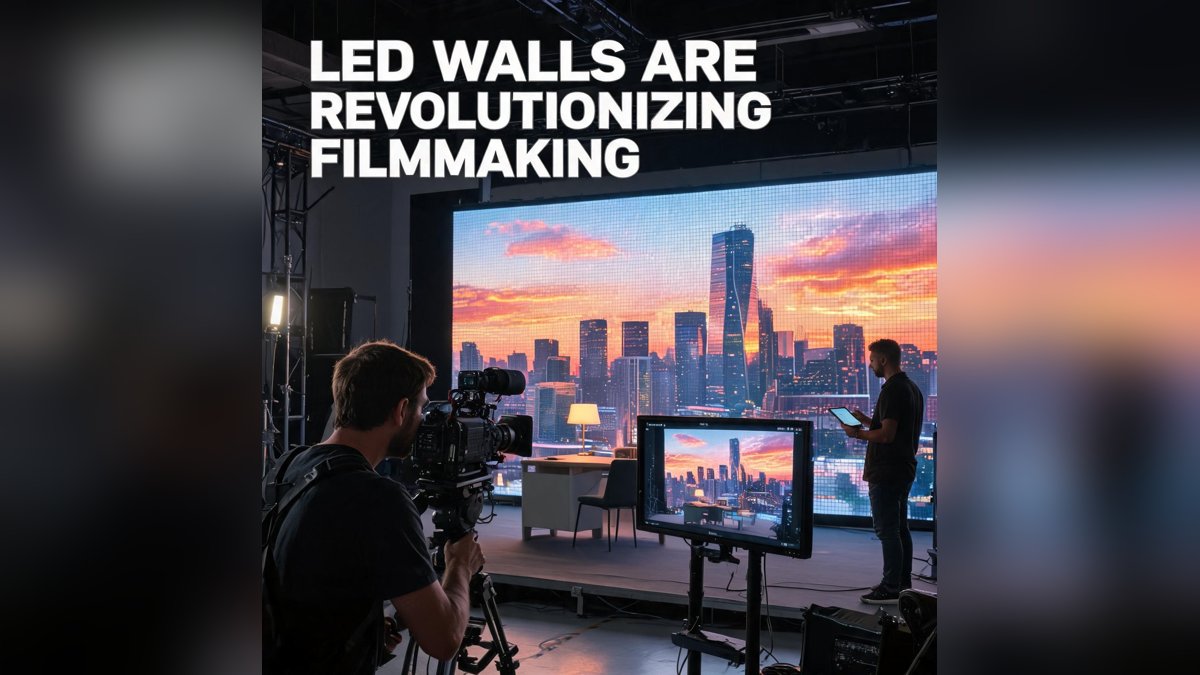
An LED wall stage, often called "The Volume," consists of large, curved LED panels that form a immersive backdrop. Instead of actors performing in front of a green screen with digital backgrounds added months later in post-production, the background is rendered live by game engine software and displayed on the LED wall. Cameras track their own position in real time, so the perspective on the LED wall shifts naturally as the camera moves. The result is a seamless blend of physical and digital environments that looks stunning straight out of the camera.
According to a report from the Production Guild of America, over 60 percent of major Hollywood productions now use LED wall technology for at least some of their shots. Studios like Netflix, Warner Bros., and Disney have all invested heavily in dedicated virtual production facilities. The technology has matured to the point where the LED panels themselves have pixel pitches as fine as 1.5 millimeters, providing near-seamless imagery even in extreme close-ups. What was once a niche experimental tool has become a cornerstone of modern filmmaking.
Cost and Creative Benefits for Filmmakers
The most obvious advantage of LED wall production is cost savings. Traditional location shooting can consume enormous budgets—transporting cast and crew, securing permits, dealing with weather delays, and building practical sets. With an LED volume, a single soundstage can transform from a snowy mountain peak to a spaceship bridge in minutes by swapping the digital background. Productions report saving 30 to 50 percent on visual effects budgets because so much of the final image is captured in camera rather than created later by VFX artists.
"LED walls don't just save money—they fundamentally change the creative process. Actors give better performances when they can see and react to their environment instead of staring at tennis balls on sticks. And directors get to see the final composite image on set, making creative decisions in real time rather than months later in a color grading suite."—James Cameron, speaking at the 2025 Virtual Production Summit
Beyond cost, the creative flexibility is transformative. Lighting on LED walls can be programmed to simulate any time of day, weather condition, or lighting scenario. A scene that requires golden hour sunlight can be shot at midnight simply by adjusting the LED display. Reflections on car hoods, shiny floors, and even actors' eyes are all naturally provided by the LED panels, eliminating many of the tedious match-moving tasks that have long plagued VFX supervisors. Directors can also experiment with different backgrounds on the fly, trying out multiple environments for the same scene within minutes rather than spending days on location scouts.
- Faster production timelines: Scenes that once required weeks of location prep can now be shot in days within an LED volume.
- Unified lighting: The LED wall provides consistent, controllable lighting that eliminates many post-production color correction challenges.
- Reduced travel: Productions can stay in one studio city rather than traveling to multiple locations, reducing carbon footprint and logistical complexity.
- Real-time collaboration: Directors, cinematographers, and VFX supervisors see the same image simultaneously and can make adjustments immediately.
The Technology Behind the Magic
At the heart of every LED wall production is a powerful combination of hardware and software. The LED panels themselves are driven by real-time rendering engines built on game engine technology, most commonly Unreal Engine from Epic Games. These engines process 3D environments at 60 frames per second or higher, adjusting the perspective based on data from camera tracking systems. Companies like Sony, ROE Visual, and Samsung have developed specialized LED panels designed explicitly for film production, with high refresh rates, wide color gamuts, and HDR capabilities that match or exceed cinema standards.
Camera tracking is handled by sophisticated systems that use a combination of optical markers, inertial sensors, and computer vision. A camera rig might include a dozen or more tracking markers, each monitored by ceiling-mounted infrared cameras that calculate position and rotation with sub-millimeter accuracy. This data feeds into the rendering engine, which adjusts the background perspective to match the camera's movement. If the camera dollies left, the background shifts just as it would in the real world—an effect that is crucial for maintaining the illusion of depth and immersion.
Another critical component is the calibration workflow. Before any shoot, the production team must calibrate the LED wall's color and brightness to match the physical lighting on set. This is a meticulous process that involves measuring the output of every LED panel and creating a color lookup table that ensures consistency across the entire wall. Advances in automated calibration have reduced this setup time from days to hours, making LED production more accessible to smaller productions and television shows with tight schedules.
"What excites me most is how rapidly this technology is democratizing. Five years ago, only the biggest Disney shows could afford an LED volume. Now there are stages in Nashville, Atlanta, and Vancouver that rent by the day. Independent filmmakers are creating visuals that would have been impossible on their budgets just a few years ago."—Megan Reynolds, virtual production supervisor at Pixomondo
What the Future Holds
As LED technology continues to advance, the possibilities for filmmaking are expanding in exciting directions. One emerging trend is the combination of LED walls with volumetric capture, allowing actors to be scanned and placed into fully digital environments in real time. Another is the use of smaller, portable LED panels that can be taken on location for specific shots, bridging the gap between studio and field production. Some productions are even experimenting with transparent LED panels that can serve as interactive props and surfaces within a scene.
The next frontier is likely AI-driven environment generation, where directors can describe a scene and have the LED wall populate with a fully rendered background in minutes rather than days. Companies like Nvidia and Epic Games are already developing tools that use machine learning to generate photorealistic environments from text prompts or reference images, specifically optimized for real-time display on LED walls. This could dramatically reduce the pre-production time for virtual production, making it even more accessible and cost-effective.
For audiences, the impact of LED wall technology is already visible. Films look more immersive, lighting feels more natural, and the line between practical and digital effects continues to blur. As the technology becomes cheaper and more widespread, we can expect even smaller productions to deliver visual quality that rivals the biggest blockbusters. The revolution in filmmaking is not coming—it is already here, glowing on millions of LEDs.
Beyond the blockbuster titles generating headlines this month, several quieter releases are earning passionate followings among dedicated film enthusiasts. Independent theaters and streaming platforms alike are reporting strong word-of-mouth for smaller productions that never had massive marketing budgets but deliver storytelling that rivals their big-budget counterparts. These hidden gems often become cult classics in later years, making now the perfect time to discover them before the hype builds around their creators next projects.
Industry tracking data suggests that audience viewing habits have shifted significantly since the pandemic era, with more moviegoers waiting for critical consensus before committing to a theater visit. This has made word-of-mouth and social media buzz more influential than traditional advertising campaigns. The films that break through this noise consistently offer unique perspectives or emotional resonance that lingers long after the credits roll, creating the kind of lasting cultural impact that defines memorable cinema.
For those planning a movie marathon, consider pairing these new releases with classic films in similar genres to appreciate how filmmaking techniques have evolved over time. Many streaming services now offer curated collections that highlight these connections, from visual style comparisons to thematic explorations across different eras. This approach transforms casual viewing into a richer experience that deepens appreciation for the artistry involved in modern filmmaking.
Beyond the blockbuster titles generating headlines this month, several quieter releases are earning passionate followings among dedicated film enthusiasts. Independent theaters and streaming platforms alike are reporting strong word-of-mouth for smaller productions that never had massive marketing budgets but deliver storytelling that rivals their big-budget counterparts. These hidden gems often become cult classics in later years, making now the perfect time to discover them before the hype builds around their creators next projects.
Industry tracking data suggests that audience viewing habits have shifted significantly since the pandemic era, with more moviegoers waiting for critical consensus before committing to a theater visit. This has made word-of-mouth and social media buzz more influential than traditional advertising campaigns. The films that break through this noise consistently offer unique perspectives or emotional resonance that lingers long after the credits roll, creating the kind of lasting cultural impact that defines memorable cinema.
For those planning a movie marathon, consider pairing these new releases with classic films in similar genres to appreciate how filmmaking techniques have evolved over time. Many streaming services now offer curated collections that highlight these connections, from visual style comparisons to thematic explorations across different eras. This approach transforms casual viewing into a richer experience that deepens appreciation for the artistry involved in modern filmmaking.